19 August 2026
Customary Marriages in South Africa: What You Need To Know
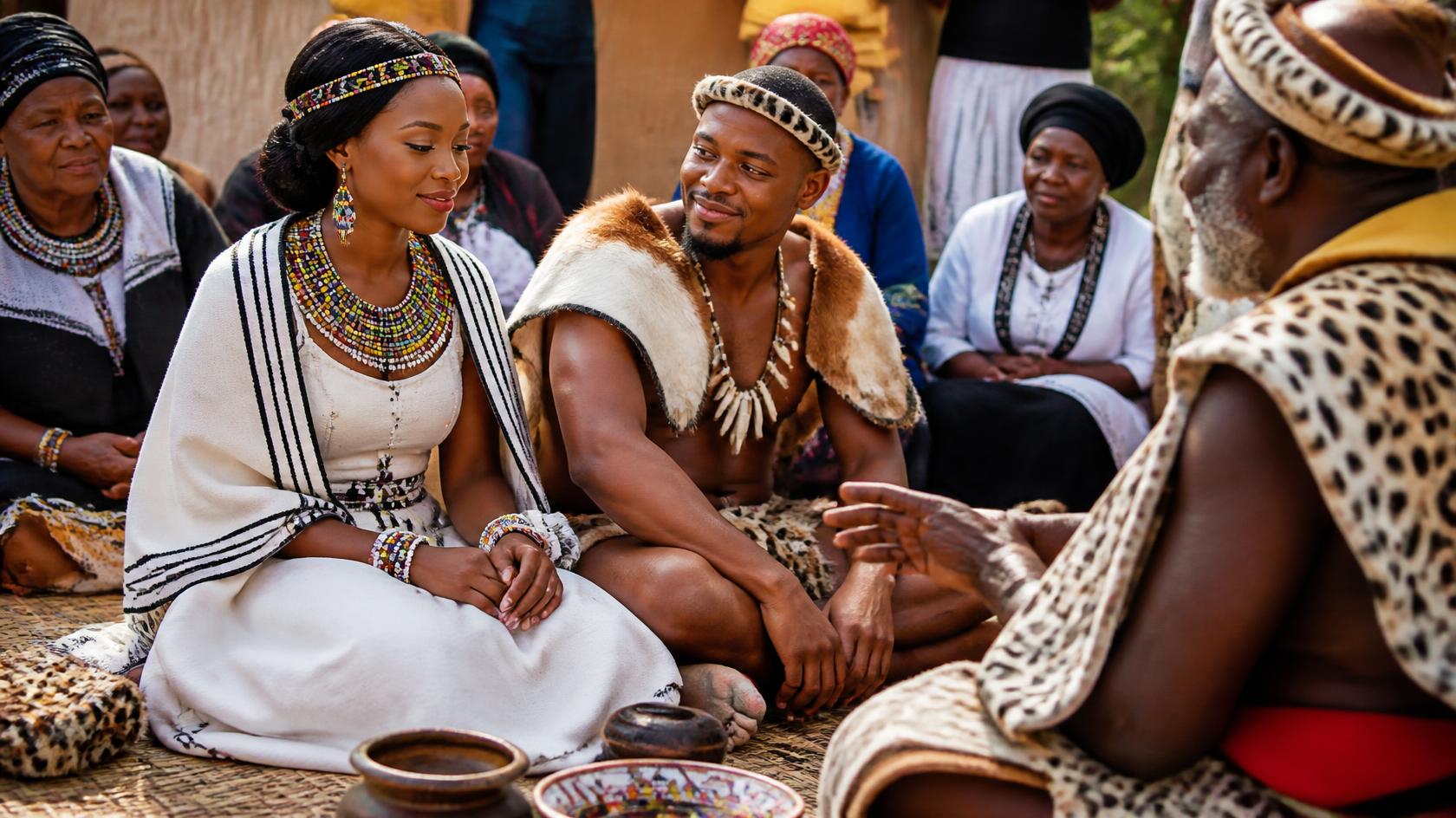
Customary marriages are an important part of South Africa's legal and cultural landscape. They are legally recognised marriages and are protected by the Constitution and the Recognition of Customary Marriages Act 120 of 1998 (RCMA).
However, customary marriages can raise complicated legal questions, particularly where there is uncertainty about whether a marriage was validly concluded, whether it was registered, the payment of lobolo, the existence of more than one customary marriage, matrimonial property, inheritance, or the dissolution of the marriage.
This article provides an overview of some of the important legal considerations relating to customary marriages in South Africa.
1. What is a customary marriage?
A customary marriage is a marriage concluded in accordance with customary law.
The RCMA provides legal recognition to customary marriages and sets out the requirements for their validity. For a customary marriage entered into after the commencement of the Act, the prospective spouses must generally:
- both be at least 18 years old;
- consent to be married to each other under customary law; and
- have the marriage negotiated and entered into or celebrated in accordance with customary law.
The specific customs and practices applicable to the families and community concerned may therefore be important when determining whether a customary marriage was concluded.
2. Is payment of lobolo required?
Lobolo is an important aspect of many customary marriage negotiations. However, it is important to understand that the payment of lobolo should not be treated as the only requirement for determining whether a customary marriage exists.
The courts have repeatedly emphasised that the validity of a customary marriage requires consideration of the applicable customary-law requirements as a whole.
The Supreme Court of Appeal has recognised that the handing over of the bride may also be relevant in determining whether the customary marriage was concluded, depending on the applicable customary law and circumstances.
Consequently, a dispute concerning whether the full lobolo amount was paid does not necessarily provide a complete answer to whether a customary marriage exists.
Each matter must be considered according to its particular facts and the applicable customary law.
3. Does a customary marriage have to be registered?
Yes. The spouses have a duty to ensure that their customary marriage is registered.
The RCMA generally requires customary marriages concluded after its commencement to be registered within three months, or within a longer period prescribed by the Minister.
However, failure to register a customary marriage does not invalidate the marriage.
This is an extremely important point.
Section 4(9) of the RCMA expressly provides that failure to register a customary marriage does not affect its validity. Registration is therefore important for purposes of proving and recording the marriage, but lack of a registration certificate does not, by itself, mean that no customary marriage exists.
Where there is a dispute about an unregistered customary marriage, a court may also order registration following an appropriate application and investigation.
4. What if the customary marriage was never registered?
An unregistered customary marriage can create practical difficulties, particularly when dealing with:
- divorce;
- deceased estates;
- inheritance;
- matrimonial property;
- pension and other benefits;
- insurance claims;
- property ownership; and
- subsequent marriages.
A spouse or another person with a sufficient interest may seek an enquiry into the existence of the customary marriage. In appropriate circumstances, a court can order the registration of the marriage.
It is therefore advisable to address registration issues as soon as possible rather than waiting until a dispute arises.
5. Can a person have more than one customary marriage?
Yes, South African law recognises the possibility of polygynous customary marriages, but additional legal requirements apply.
A person who is already married under customary law cannot simply enter into another marriage without complying with the applicable legal requirements.
Section 7 of the RCMA regulates the proprietary consequences of customary marriages, while section 8 regulates the dissolution of customary marriages. In addition, where a husband wishes to enter into a further customary marriage, section 7(6) requires an application to court for approval of a written contract regulating the matrimonial property system of the marriages.
The Constitutional Court has also emphasised the importance of the rights and dignity of existing spouses in the context of further customary marriages.
In Mayelane v Ngwenyama and Another (CCT 57/12) [2013] ZACC 14; 2013 (4) SA 415 (CC); 2013 (8) BCLR 918 (CC) (30 May 2013), the Constitutional Court held, in the context of Xitsonga customary law, that the consent of the first wife was required for the validity of a subsequent customary marriage. The Court stressed that customary law must be interpreted and developed consistently with constitutional values, including dignity and equality.
This demonstrates why disputes involving subsequent customary marriages require careful consideration of both the applicable customary law and the RCMA.
6. What happens to property in a customary marriage?
The proprietary consequences of a customary marriage depend on several factors, including:
- when the marriage was concluded;
- whether it is monogamous or polygynous;
- whether an antenuptial or other relevant agreement exists;
- whether a court-approved contract regulating matrimonial property was concluded; and
- the applicable provisions of the RCMA and subsequent constitutional jurisprudence.
The law relating to matrimonial property in customary marriages has undergone significant constitutional development.
In Gumede (born Shange) v President of the Republic of South Africa and Others (CCT 50/08) [2008] ZACC 23; 2009 (3) SA 152 (CC); 2009 (3) BCLR 243 (CC) (8 December 2008), the Constitutional Court addressed discriminatory proprietary rules applicable to customary marriages and emphasised the constitutional rights to equality and dignity of women married under customary law.
The law should therefore not be approached on the assumption that a customary marriage leaves a wife without rights in matrimonial property.
7. Can a customary marriage be divorced?
Yes.
A customary marriage is legally recognised and can be dissolved by a court by means of a divorce order. Section 8 of the RCMA provides for the dissolution of a customary marriage by a court by a decree of divorce on the ground of the irretrievable breakdown of the marriage.
A divorce involving a customary marriage may require consideration of issues such as:
- division of matrimonial property;
- maintenance;
- minor children;
- custody and care;
- contact;
- the proprietary consequences of the marriage; and
- the rights of other spouses in a polygynous marriage.
These matters can become particularly complex where the marriage was never formally registered or where there are competing claims regarding the matrimonial property system.
8. What if one spouse denies that a customary marriage exists?
This is a common source of litigation.
A person may claim that:
"There was no customary marriage because lobolo was not fully paid."
Another person may argue:
"The families negotiated the marriage, the bride was accepted and handed over, and the parties lived as husband and wife."
The Court must then determine whether the requirements for a valid customary marriage were satisfied. The courts have recognised that customary law is living law and that the content of the applicable customary law must be determined in the circumstances of each case. In Mayelane, the Constitutional Court emphasised that determining the content of customary law is a legal enquiry for the courts, informed by the relevant customary practices.
Evidence from family members, elders and persons involved in the marriage negotiations can therefore become highly relevant.
9. Customary law and the Constitution
Customary law does not operate outside the Constitution.
Section 211(3) of the Constitution requires courts to apply customary law where it is applicable, subject to the Constitution and legislation dealing specifically with customary law. The Constitutional Court has repeatedly emphasised that customary law must be consistent with constitutional rights and values.
This has been particularly important in developing the rights of women in customary marriages.
The decision in Gumede is an important example of the Constitutional Court addressing discriminatory rules affecting women married under customary law.
10. Why legal advice is important
Customary marriage disputes are often factually and legally complex. A dispute that appears to be about lobolo may actually involve questions concerning:
- whether a marriage was concluded;
- which customary law applies;
- whether the parties consented;
- whether the bride was handed over;
- whether the marriage was registered;
- whether another customary marriage already existed;
- the matrimonial property regime;
- the rights of spouses and children; or
- the consequences of divorce or death.
For this reason, it is important to obtain legal advice based on the specific facts and customary practices applicable to the parties.
How Fortunate Ramoraswi Attorneys Inc can assist
Fortunate Ramoraswi Attorneys Inc can assist clients with legal matters relating to customary marriages, including:
- Advice on the validity and recognition of customary marriages;
- Registration and proof of customary marriages;
- Disputes concerning lobolo and marriage negotiations;
- Recognition of unregistered customary marriages;
- Disputes involving multiple customary marriages;
- Matrimonial property and proprietary consequences;
- Customary marriage divorce proceedings;
- Maintenance and children's matters arising from customary marriages;
- Estate and inheritance matters involving customary spouses; and
- Litigation concerning the existence, validity or consequences of a customary marriage.
If you are uncertain about your legal status as a customary spouse, or if you are involved in a dispute concerning a customary marriage, it is advisable to obtain legal advice before taking further steps.
Kindly contact us on fortunater@fortunaterattorneys.co.za
0100177013 / 0833944802
Disclaimer: This article is provided for general informational purposes only and does not constitute legal advice. Customary law matters are highly fact-specific, and the legal position may depend on the circumstances of the particular marriage and the applicable customary law. Readers should obtain independent legal advice regarding their individual circumstances.